Deck Builders in Tacoma and Pierce County
A deck in Western Washington lives the same life as a roof: eight months of rain, four months of sun, and moss volunteering for every shaded board. Canyon Roofing Northwest builds decks from composite and pressure-treated wood that are chosen and detailed for exactly that life, so your deck spends its years hosting summers instead of demanding maintenance.
FREE ESTIMATES
|
TREX, TIMBERTECH & FIBERON COMPOSITE PLUS PRESSURE-TREATED WOOD
|
WA CONTRACTOR LICENSE #CANYORN741N8
Composite Decking:
Trex, TimberTech, and Fiberon
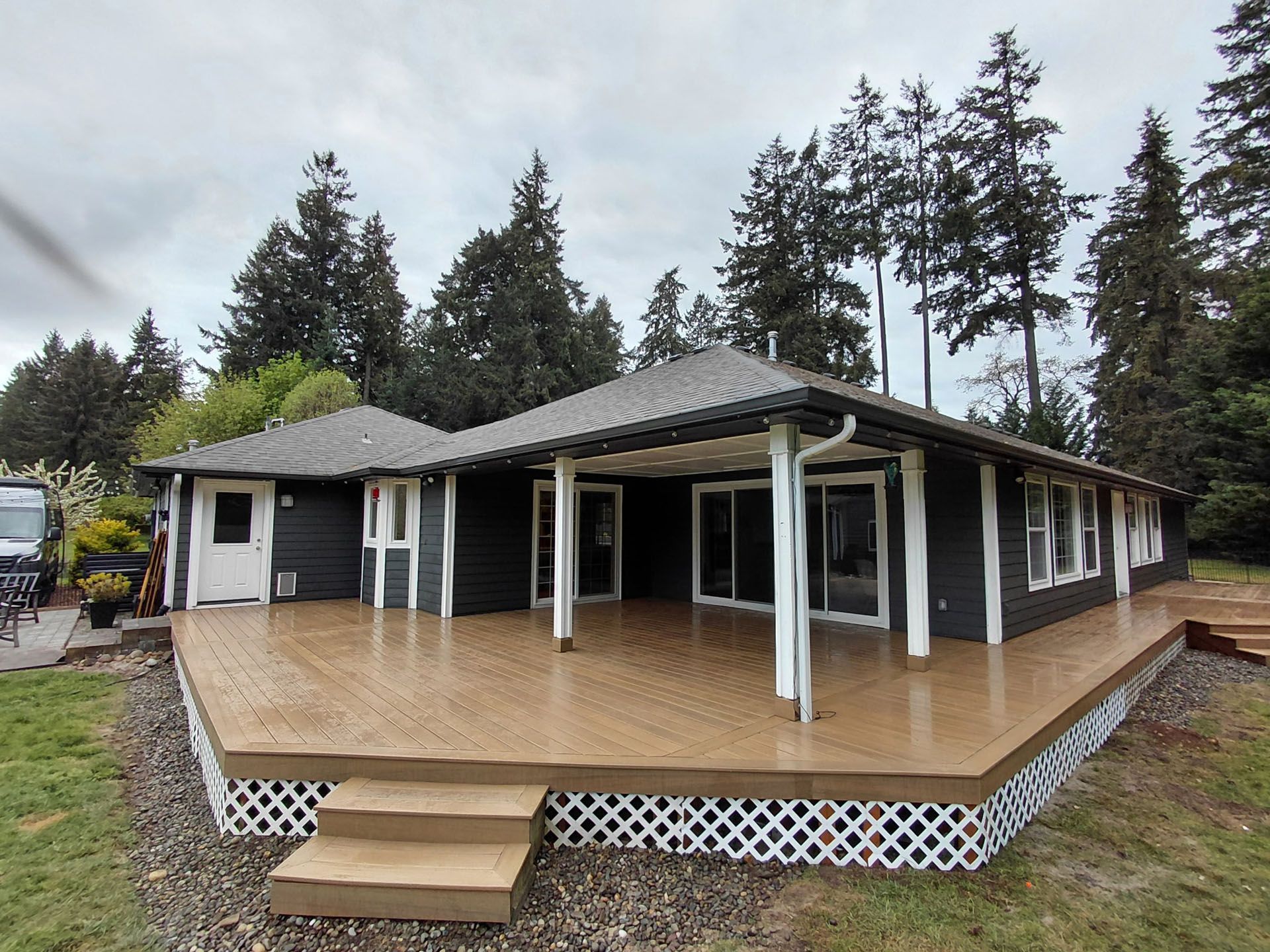
Composite is what most of our Tacoma clients choose, and the reason is maintenance math. A composite deck never needs staining or sealing, does not splinter, and stands up to our wet season with a rinse instead of a refinish. We build with the three composite systems that have earned their reputations:

Trex
The brand most homeowners ask for by name, with a wide range of colors and grain patterns and a long manufacturer warranty behind the boards.

TimberTech
Capped composite and PVC lines with strong moisture resistance and some of the most convincing wood looks in the category.

Fiberon
Competitive performance and finish options that often sharpen the budget without giving up the composite advantages.
Which one belongs on your deck depends on color, finish, board profile, and budget. We bring samples to the estimate so you can see the boards in your own light, next to your own house, instead of under showroom bulbs.
Pressure-Treated Wood Decks
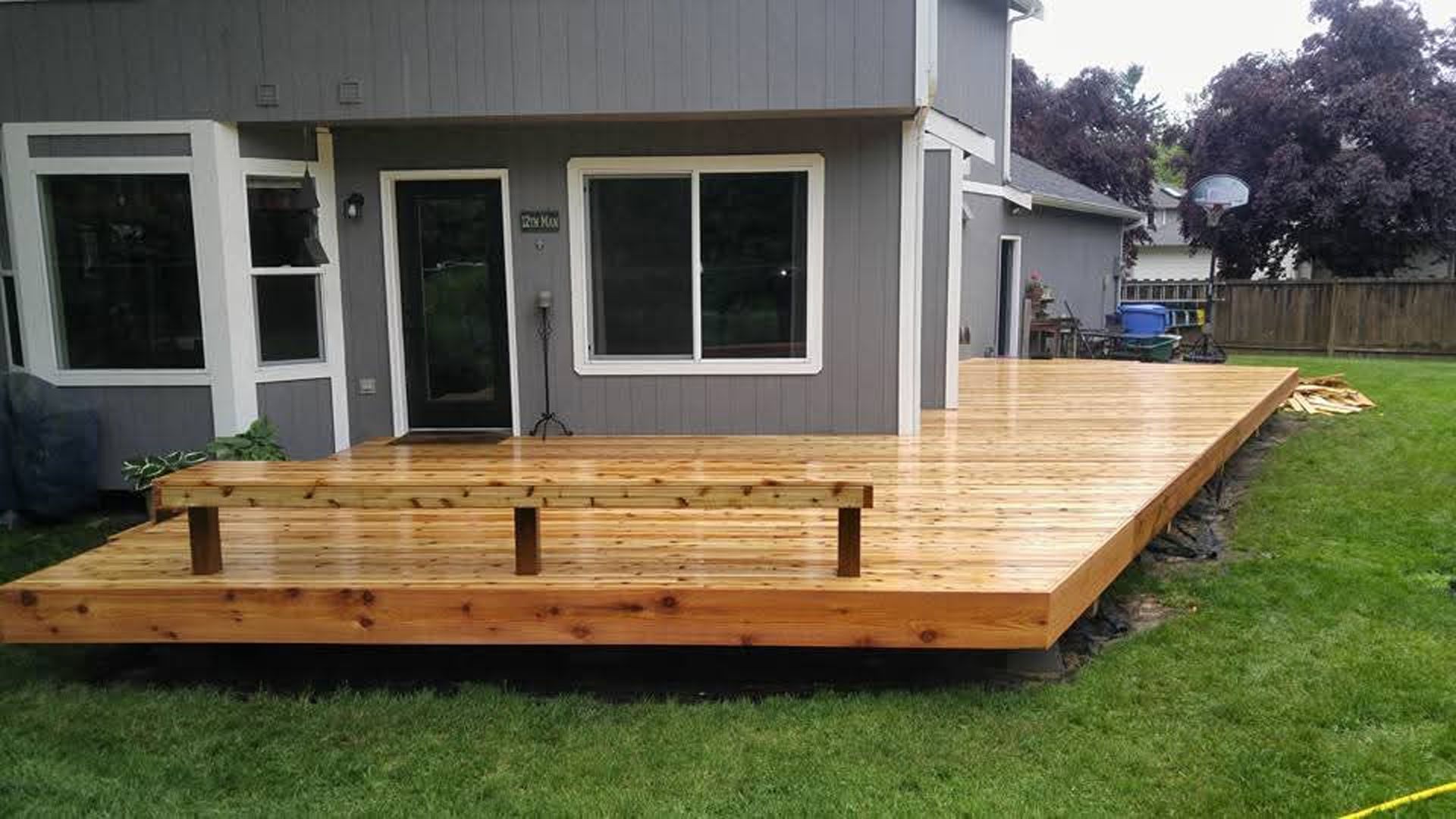
Wood is still the most budget-friendly way to build a deck, and modern pressure-treated lumber is rated for ground contact and our climate's moisture. A wood deck asks more of you than composite: it wants cleaning and a re-seal on a regular cycle, and it will gray if you skip them. In exchange, it costs meaningfully less up front and takes stain any color you want.
We build pressure-treated decks with the details that decide how they age here: proper joist spacing, ground clearance and airflow underneath, flashing where the deck meets the house, and fasteners rated for treated lumber. The ledger connection, where decks attach to the home, is where bad deck builds fail, and it is the detail we are most careful about on every build.
Composite or Wood?
An Honest Comparison
| Composite (Trex, TimberTech, Fiberon) | Pressure-Treated Wood | |
|---|---|---|
| Upfront cost | Higher | Lower |
| Yearly upkeep | Rinse and sweep | Clean, re-stain or re-seal on a regular cycle |
| Lifespan in the PNW | Decades, with manufacturer warranties on the boards | Strong when maintained, shorter when neglected |
| Look and feel | Consistent, wide color range, no splinters | Real wood grain, takes any stain, can splinter with age |
| Moss and moisture | Resists moisture; moss wipes off the surface | Needs treatment; moisture is the main aging force |
There is no wrong answer, only a wrong match for how you want to spend your Saturdays. Tell us your honest appetite for maintenance and we will tell you which side of this table you belong on.
What Your Deck Build Includes
Design and layout
Size, height, stairs, railing style, and how the deck meets your house and yard. We build to how you will actually use the space: dining, grilling, hot tub loads, covered sections.
Structure built to code
Footings sized for the load, proper ledger attachment and flashing, joist protection tape on request, and hardware rated for the lumber it touches.
Railings and stairs
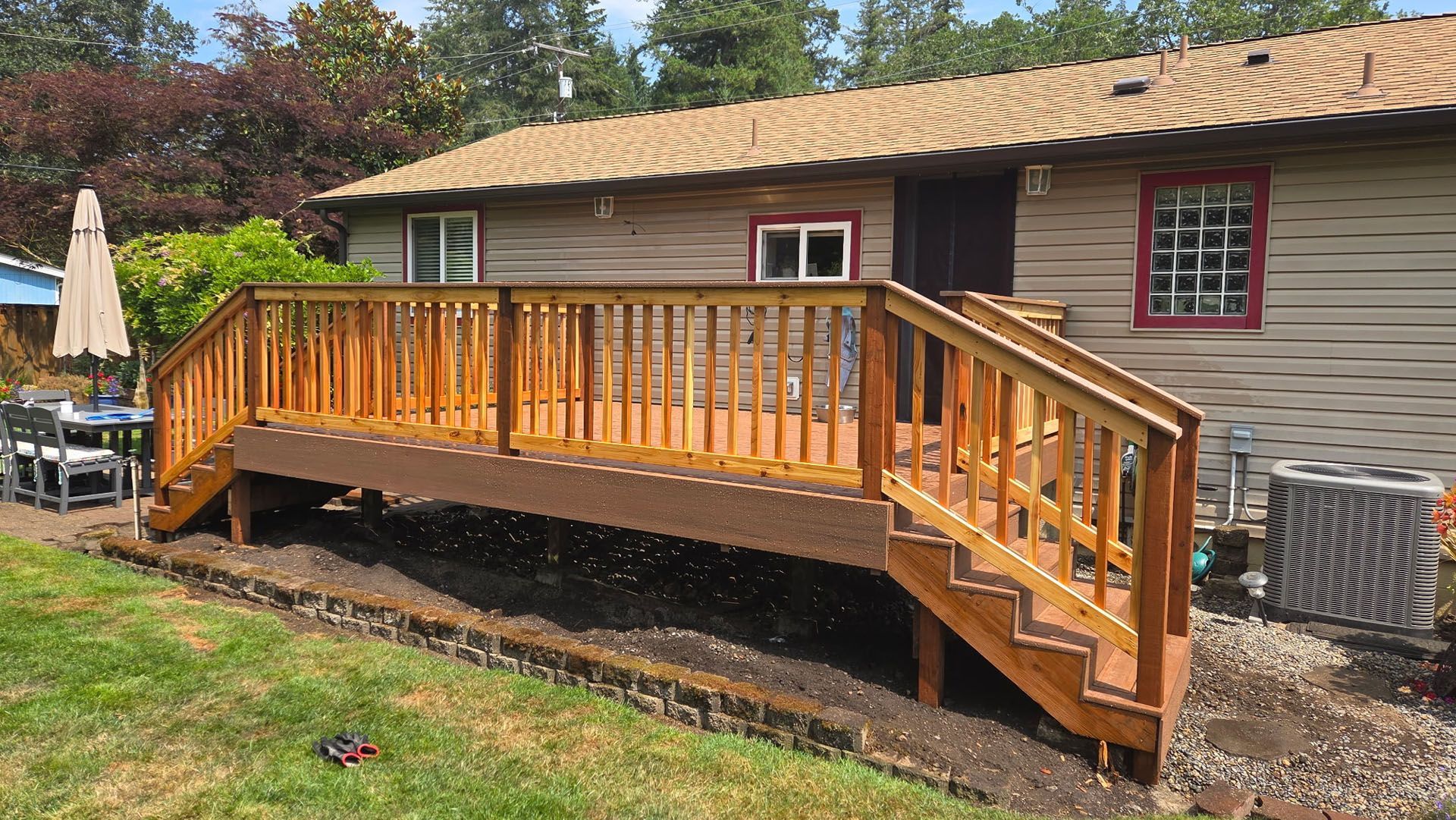
Composite, wood, or mixed railing systems, with stairs built to the same standard as the deck itself.
Permits
Canyon pulls permits for deck projects or the homeowner does.
Cleanup and walkthrough
The site is left clean, and we walk the finished deck with you before we call it done.
Planning Your Deck:
The Questions We Ask First
How will you actually use it?
Dining for six needs different dimensions than two chairs and a coffee. Grills want clearance from the house and from railings. If a hot tub is even a maybe, the framing should know now, not after.
Where does the weather come from?
Afternoon sun, prevailing wind, and the drip line of your roof all shape where the deck wants to sit and whether part of it deserves cover.
Where does the water go?
Decks shed rain onto whatever is below them. Grading, downspouts, and what happens under the deck are part of the design, not an afterthought.
How does it connect to the yard?
Stair placement decides whether the deck is a destination or a hallway. Wide stairs double as seating; a landing can save a steep run.
What is the ten-year plan?
Selling in three years argues differently than staying for twenty. It changes the material conversation and where the budget belongs.
None of this costs extra. It is just the difference between building a deck and building your deck.
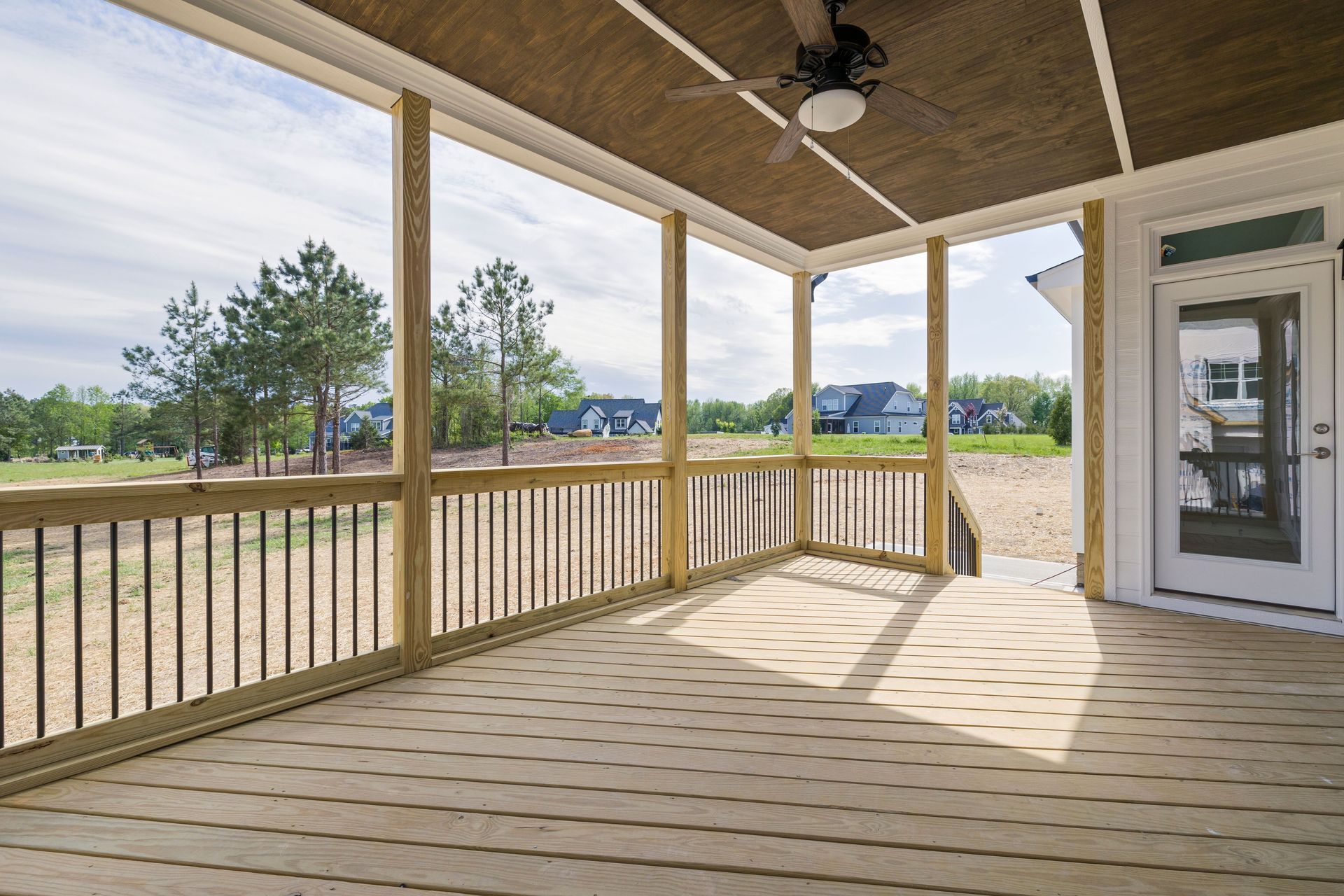
Why a Roofing Company Builds Good Decks
Fair question, and the answer is flashing. The two places water destroys homes are where the roof meets penetrations and where the deck ledger meets the siding, and they fail the same way: water getting behind a connection that was not flashed right. Our crews spend all winter making the first one watertight, and they bring the same discipline to the second. Add the habits of working on occupied homes (protected landscaping, clean sites, honest schedules) and the overlap makes more sense than it first appears.
Roofing crews and deck crews are scheduled separately, so a deck project never slows an emergency roof call, and vice versa.
Deck Maintenance in the Northwest, Honestly
Every deck here needs some attention; the material decides how much.
We hand you material-specific care guidance at the final walkthrough, so the deck you paid for is the deck you still have in ten years.
Composite (Trex, TimberTech, Fiberon)
Sweep debris out of the gaps, rinse off the winter film in spring, and keep planters off the boards so moisture cannot sit. That is the list. Stubborn shade-side film comes off with a soft brush and mild soap.
Pressure-Treated Wood
Clean annually, and re-stain or re-seal on the cycle your stain specifies, typically every few years. The boards will tell you: when water stops beading and starts soaking in, the clock has run out.
For Both Types of Decking
Trim back vegetation that keeps boards wet, and clear the gap between deck and house siding where debris loves to collect. Ten minutes in October saves boards in May.
Deck Building Questions We Hear Most
How much does a new deck cost in Tacoma?
It depends on size, height, material, and railing choices, which is why we quote from a free on-site estimate rather than a price list. Pressure-treated wood is the budget anchor; Trex, TimberTech, and Fiberon composites cost more up front and less in upkeep.
Which is better, Trex, TimberTech, or Fiberon?
All three are proven composite systems, and the real differences are color range, board finish, and price point. We bring samples of each to the estimate so you can compare them at your own house instead of taking anyone's word for it.
How long does a deck build take?
Most residential decks take days to a couple of weeks once materials are on hand, depending on size, height, and weather. You get a real schedule with your written estimate, not a range that quietly doubles.
Can you build a deck in the rainy season?
Usually, yes. Deck framing and composite installation tolerate weather that roofing does not, and the off season often means faster scheduling. Some steps, like staining a wood deck, wait for dry days.
Do composite decks get slippery in the rain?
Modern capped composites from Trex, TimberTech, and Fiberon are textured for wet-weather grip and perform well here. Like any surface in the Northwest, shaded boards appreciate an occasional rinse to keep organic film from building up.

Get Your Deck Ready Before Summer Books Up
The best decks in the neighborhood were estimated in the off season. Tell us what you are imagining, and we will bring the samples and the tape measure.